


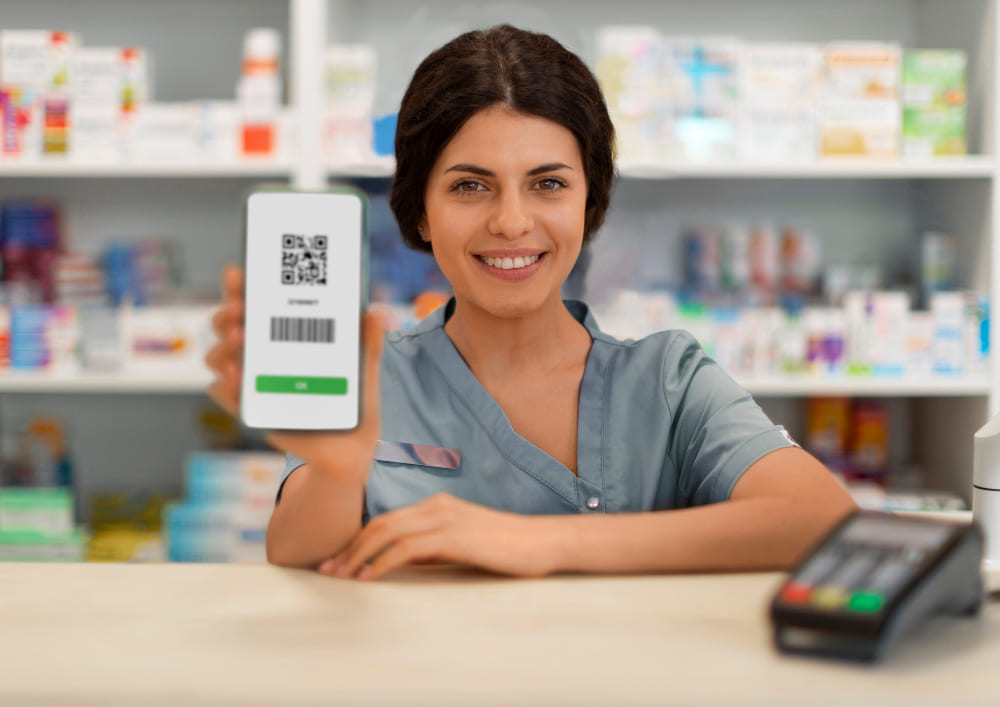
Why Pharmacies Are Considered Low-Risk by Payment Processors
Ask any pharmacy owner about their payment processor, and you will probably hear a story. A sudden hold, a cryptic email about “elevated risk,” an account review that drags on for weeks. It is a quiet frustration the industry shares. However, here is the part most people miss: not every pharmacy sits in the same risk bucket, and many established pharmacies are actually treated as low-risk merchants by the processors that know the sector.
VELLIS NEWS
18 May 2026
By writers
Related Articles
Vellis News
22 September 2025
The 4 PCI Compliance Levels Explained
At its core, PCI compliance is all about protecting sensitive customer data and ensuring that payment transactions remain secure. The PCI DSS (Payment Card Industry Data Security Standard) framework defines four PCI compliance levels, which vary depending on how many transactions a business processes each year and its history of security breaches.

Vellis News
18 May 2026
How Gaming Operators Can Reduce Payment Friction and Improve Player Conversion
In the gaming industry, the checkout page is the ultimate testing ground. Because in-game purchases are heavily driven by impulse and excitement, any technical hesitation gives users time to reconsider. Optimizing this exact moment is one of the fastest ways for operators to drive direct revenue growth without increasing user acquisition costs. You don’t want […]

Vellis News
15 November 2025
Optimizing Mobile Checkout Payments for E-commerce – Best Practices
Mobile commerce continues to grow, but so does mobile cart abandonment. Shoppers expect fast, intuitive, and secure purchasing experiences, especially when browsing on the go.
Ask any pharmacy owner about their payment processor, and you will probably hear a story. A sudden hold, a cryptic email about “elevated risk,” an account review that drags on for weeks. It is a quiet frustration the industry shares. However, here is the part most people miss: not every pharmacy sits in the same risk bucket, and many established pharmacies are actually treated as low-risk merchants by the processors that know the sector.
This matters for your bottom line. Being viewed as low-risk means better rates, faster approvals, smoother onboarding and fewer surprises down the line. Let’s unpack why that distinction exists, what moves a pharmacy from the high-risk column into the low-risk one, and what it means for your business.
What “low-risk” really means in payment processing
Processors group businesses by the likelihood of chargebacks, fraud, regulatory issues and sudden account closures. A low-risk merchant is one the acquiring bank expects to behave predictably. Stable transaction patterns, clean compliance history, low dispute rates and a recognisable operating model all push a business into this category.
Pharmacies that dispense locally, keep proper licensing, and operate within clear regulatory frameworks tend to fit this profile well. Retail pharmacies especially benefit from this classification because most transactions happen face-to-face, which reduces fraud exposure. If you want secure and scalable payment solutions that match this lower-risk profile, the right provider will price and approve your account accordingly.
Why legitimate pharmacies earn the low-risk label
A few specific factors tip the scales in favour of a pharmacy being underwritten as low-risk. Each one reduces the unknowns a processor has to price in.
- Licensed and regulated operations: Pharmacies operate under state, national and sometimes international health regulators. That oversight gives processors confidence the business is legitimate and unlikely to disappear overnight.
- Predictable customer base: Most pharmacy customers are repeat buyers, often on prescriptions or long-term treatments. Repeat, low-ticket transactions from a stable clientele are exactly what processors like to see.
- Lower chargeback rates: Face-to-face transactions and clear product descriptors make disputes rare. When someone picks up a prescription in person, there is very little room for confusion about what they paid for.
- Strong compliance posture: Pharmacies already handle HIPAA, PCI DSS and data protection as part of day-to-day work. That makes them easier to underwrite than a merchant starting from scratch.
- Transparent product catalogue: Prescription medicines and common OTC items are well understood by card networks. There is no grey area about what is being sold.

Retail versus online: where the risk profile shifts
Not all pharmacies look the same to an underwriter. A neighbourhood retail pharmacy filling prescriptions in person is about as low-risk as healthcare merchants get. An online pharmacy, even a properly licensed one, sits a step higher on the risk scale because card-not-present transactions carry more fraud exposure.
That said, online pharmacies can still be treated favourably when they do the right things. LegitScript certification, clear prescriber verification, robust AVS and 3D Secure on every transaction, and clean chargeback records all help. A processor who understands online pharmacy payment processing can often place a compliant online operator at or close to the same rates as a retail pharmacy.
What the low-risk classification means for your pharmacy
When your business is classified as low-risk, several things change in your favour.
- Better pricing. Interchange-plus rates typically sit in the 2.2% to 3.0% range for low-risk pharmacy merchants, compared to 3.5% or higher for those tagged high-risk.
- Faster approvals. Underwriting moves quickly because the processor has less to investigate. What takes a high-risk applicant weeks can be done in days.
- No rolling reserves. High-risk accounts often have 5% to 10% of processing volume held back for months. Low-risk pharmacies generally avoid this entirely.
- Faster settlement. Daily or next-day funding is the norm rather than the exception. Your cash flow stays predictable.
- More provider choice. You are not limited to a handful of high-risk specialists. You have options, and you can negotiate.
How to protect and maintain your low-risk status
Being classified as low-risk is not a one-time event. Processors re-evaluate accounts when chargeback ratios spike, product catalogues expand into grey areas, or transaction volumes shift suddenly. A few habits keep your account healthy.
Keep your chargeback ratio well below 1%. Use clear, recognisable descriptors on customer statements so shoppers remember what they bought. Verify bank details at signup. Offer easy refunds to reduce friendly fraud. Avoid selling products that stray into regulated or restricted territory without first telling your processor. When in doubt, overcommunicate with your acquirer. The quickest way to lose your low-risk status is to surprise the people underwriting you.
Working with a processor that understands the sector
A generic payment processor can technically onboard a pharmacy, but generic processors also tend to panic at the first sign of healthcare complexity. Working with a provider that already serves pharmacies means your account is priced, reviewed and supported by people who understand the difference between a compliant retail chemist and an unregulated online seller. That context is what keeps your rates low and your account stable.
At Vellis, pharmacy merchants benefit from payment infrastructure built specifically around healthcare compliance, faster underwriting and support that does not default to suspicion. The result is processing that fits how pharmacies actually operate, not how a generic processor assumes they do.
FAQs
Are all pharmacies considered low-risk?
No. Retail pharmacies and compliant licensed operators are often low-risk, but online pharmacies, compounding pharmacies and anyone selling controlled substances usually sit higher on the scale. Processors assess each business individually, so two pharmacies in the same category can receive different classifications depending on their compliance history and dispute rates.
What rates can a low-risk pharmacy expect?
Most low-risk pharmacies can secure interchange-plus rates in the range of 2.2% to 3.0%, depending on transaction mix and volume. Higher ticket averages and consistent monthly revenue can also work in your favour during rate negotiations.
Does selling OTC products affect risk classification?
OTC sales are usually fine. The risk profile shifts only when a pharmacy adds weight-loss, peptide or nutraceutical products that card networks view as higher risk. If you stock those product lines, be transparent with your processor upfront rather than letting them discover it later.
Can an online pharmacy ever be low-risk?
Yes. A LegitScript certified online pharmacy with a strong compliance record and low dispute rate can be priced close to retail rates by a specialist processor. Maintaining current certification and documenting your compliance programme gives processors the confidence they need to offer competitive terms.
What is the single biggest driver of pharmacy risk ratings?
Chargeback ratio. Keeping disputes under 1% of transactions is the strongest signal a processor can see that your business is stable. Pair that with clear refund policies and proactive customer communication and you remove most of the conditions that cause disputes in the first place.
References
Durango Merchant Services. (2024). Pharmacy merchant account. Durango Merchant Services. https://durangomerchantservices.com/pharmacy-merchant-account/
Emporos. (2024). What is merchant services and why does it matter? Emporos. https://www.emporos.net/what-is-pharmacy-merchant-services-and-why-does-it-matter/
National Processing. (2025). High-risk payment processing for online pharmacies. National Processing. https://nationalprocessing.com/blog/online-pharmacy-payment-processing/
PaymentCloud. (2025). Online pharmacy payment processing and merchant services. PaymentCloud. https://paymentcloudinc.com/industries/online-pharmacy/
Related Articles

Vellis News
22 August 2025
Improving Patient Collections in a Mental Health Practice
One of the most important parts of keeping your mental health business financially-healthy while providing care is improving patient collections. This is the entire journey of collecting payments from patients, starting from clear communication about fees to sending invoices, processing payments, and following up on overdue balances.

Vellis News
18 August 2025
Dental Financing Options Guide
Dental care is essential, but unfortunately, it’s not always affordable. If you’ve ever found yourself wondering how to pay for dental care that isn’t fully covered by insurance, you’re not alone.

Vellis News
13 October 2025
How to Reduce B2B Credit Card Processing Fees
B2B credit card processing fees can quietly eat into profits, especially for companies handling large volumes or high-value transactions. These fees typically include interchange fees set by card networks, assessment fees, and additional processor markups.
We use cookies to improve your experience and ensure our website functions properly. You can manage your preferences below. For more information, please refer to our Privacy Policy.

© 2025 Vellis Inc.Vellis Inc. is authorized as a Money Services Business by FINTRAC (Financial Transactions and Reports Analysis Centre of Canada) number M24204235. Vellis Inc. is a company registered in Canada, number 1000610768, headquartered at 30 Eglinton Avenue West, Mississauga, Ontario L5R3E7, Canada.
Vellis, Inc is a Registered MPS/ISO of the Canadian branch of U.S. Bank National Association and Elavon.